- 2026年10月2日
What Happens When You Sleep Right After Eating? Is “It Makes You Fat” a Myth? A Hepatologist’s Guide to the Right Way to Spend Time After Meals

1.Is It Really True That Sleeping Right After Eating Makes You Fat? A Medical Analysis
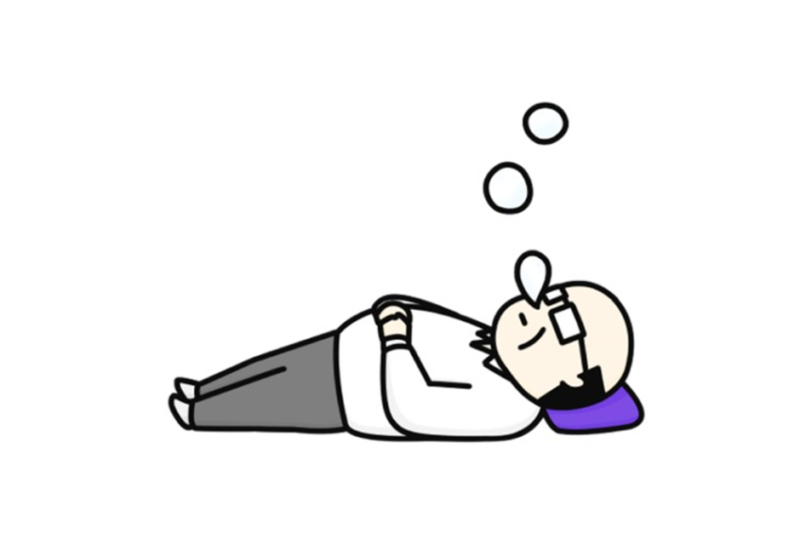
It is not entirely accurate that “sleeping right after eating always makes you fat.” Whether body weight increases fundamentally comes down to the balance of “caloric intake vs. caloric expenditure.” However, there does exist “a mechanism by which sleeping right after eating tends to promote fat gain.”
The Timing of Growth Hormone Secretion
Growth hormone has the function of breaking down fat. This hormone is secreted most abundantly “when fasting” and “during deep sleep (slow-wave sleep) immediately after falling asleep.” When going to sleep immediately after eating, blood sugar levels are still elevated, suppressing growth hormone secretion. As a result, fat breakdown is less likely to occur and body fat tends to accumulate.
Sleeping with High Insulin Levels
After eating, high insulin concentrations continue. Insulin is a hormone that “promotes fat synthesis and suppresses fat breakdown.” Falling asleep with insulin still high makes it easier for the energy consumed in the meal to be stored as fat. Sleeping immediately after a late-night meal particularly increases this risk.
In other words, “sleeping right after eating makes you fat” was not just old wives’ tale—from a hormonal perspective, it is a scientifically grounded warning.
2.The Effects of Lying Down Immediately After Eating on the Body
Effects on the Digestive System
The highest risk is gastroesophageal reflux disease (GERD). Lying down immediately after eating makes it easier for stomach contents and gastric acid to reflux into the esophagus. Particularly during sleep, reflux exposes the esophageal mucosa to acid for extended periods, increasing the risk of esophagitis, esophageal erosion, and Barrett’s esophagus (a precursor to esophageal cancer).
Effects on the Liver
Lying down after eating is not necessarily bad for the liver. After eating, blood flow to the internal organs increases for digestion and absorption, and blood flow to the liver also increases by 1.5–2 times. During this time, the liver actively processes the nutrients obtained from the meal (glycogen synthesis, fat metabolism, protein synthesis).
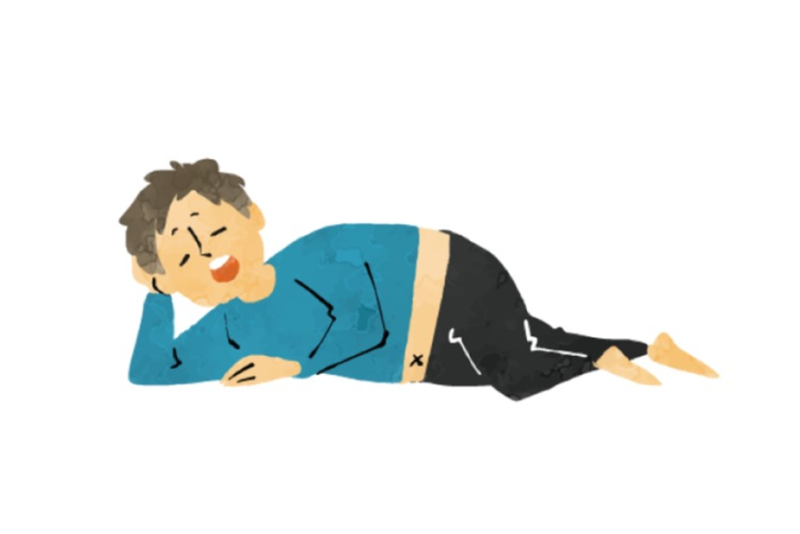
In particular, the “right lateral decubitus position (lying with the right side down)” has the benefit of further promoting blood flow to the liver by gravity. Since the liver is in the upper right abdomen, the right lateral position is the most effective posture for sending blood to the liver. However, since long-term complete sleep increases the risk of indigestion and GERD, limiting rest to approximately 10–20 minutes is important.
Expert Insight: Normalization of Energy Metabolism Through Improved Blood Flow
Ensuring adequate post-meal hepatic blood flow through the right lateral decubitus position is highly effective for allowing the liver’s energy metabolism to function smoothly. The practice of “resting slightly with the right side down after meals” is a scientifically well-founded habit for maintaining good liver combustion efficiency.
Effects on Sleep Quality
Multiple studies have shown that going to sleep on a full stomach reduces non-REM sleep (deep sleep). When deep sleep becomes shallow, fatigue, reduced concentration, and increased appetite the next morning follow.
3.Long-Term Risks to the Liver from the Habit of Sleeping Right After Eating
Beyond short-term effects, the habit of sleeping right after eating can cause serious damage to the liver when continued long-term. Particularly problematic is “accumulation of nocturnal hyperglycemia.” Going to sleep immediately after dinner keeps blood sugar levels elevated for an extended period. In this state, excess blood sugar is converted to triglycerides in the liver, worsening fatty liver.
The habit of eating a carbohydrate-centered dinner and immediately going to sleep steadily increases the risk of progression from fatty liver (MASLD) to steatohepatitis (MASH) and further to cirrhosis. Continuing a lifestyle of “eating late at night and going straight to sleep” risks the development of serious liver disease 10–20 years later.
4.The Right Way to Spend Time After Meals, as Recommended by a Hepatologist
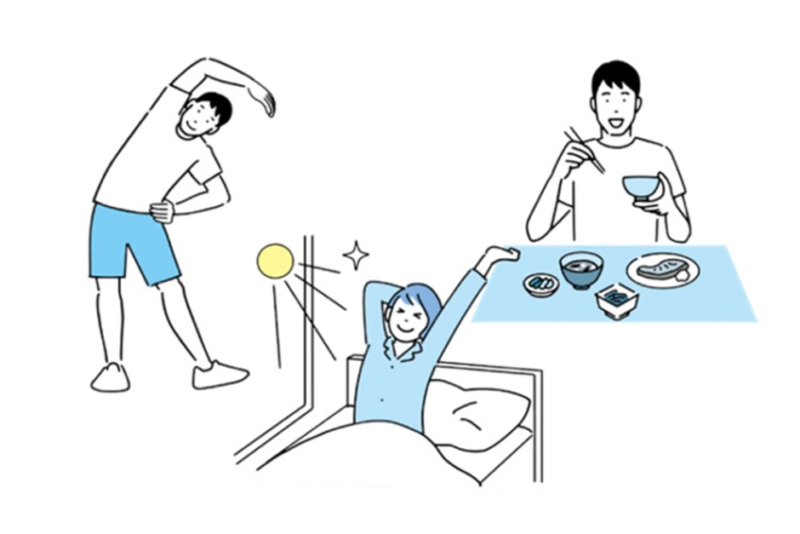
Move Lightly for 30 Minutes to 1 Hour After Eating
Washing dishes, light housework, or a gentle walk (10–15 minutes) is sufficient. Vigorous exercise causes indigestion and is unnecessary. Light exercise after meals is also effective for suppressing blood sugar spikes and preventing fatty liver.
If You Must Lie Down, Use the “Right Lateral Position” for 10–20 Minutes
Lying on the right side lowers the stomach outlet (pylorus), allowing stomach contents to move smoothly to the duodenum. Blood flow to the liver is also promoted. However, do not fall fully asleep—limit rest to 10–20 minutes.
Go to Sleep at Least 2–3 Hours After Eating
When 2–3 hours have passed after eating, most of the stomach contents have moved to the small intestine and blood sugar has begun to stabilize. Going to sleep at this point carries low risk of GERD and maintains sleep quality.
5.A Message from Your Hepatologist
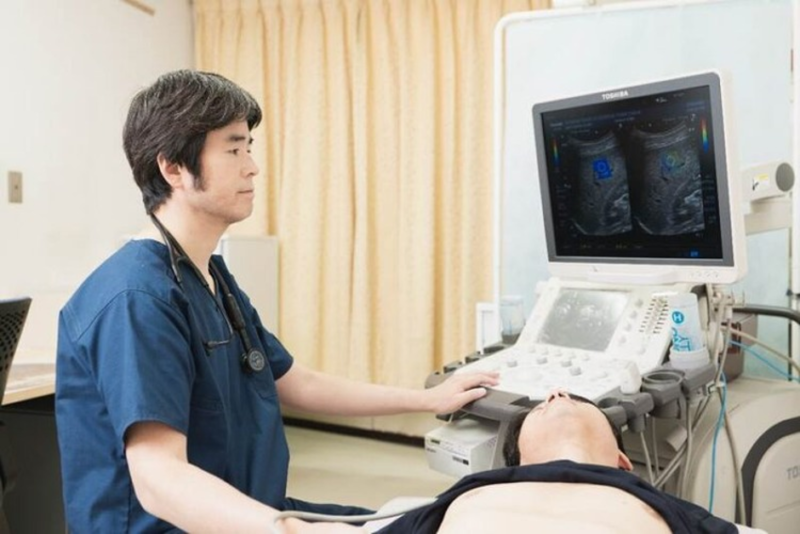
“Sleeping right after eating makes you fat” is not completely false, but what’s more important is the fact that “the habit of sleeping right after eating damages the liver.”
Fatty liver progresses with almost no subjective symptoms. “Fatigue,” “severe post-meal drowsiness,” and “growing belly” may be early signs of fatty liver. At Saito Clinic of Internal Medicine, we confirm the presence of fatty liver, hepatitis, and cirrhosis through abdominal ultrasound and provide dietary and exercise guidance tailored to each individual’s lifestyle.
さいとう内科クリニック
院長:斉藤 雅也 Masaya Saito
- 日本内科学会認定医
- 日本肝臓学会専門医
- 日本消化器病学会専門医
- 日本超音波医学会専門医
- 日本消化器内視鏡学会専門医
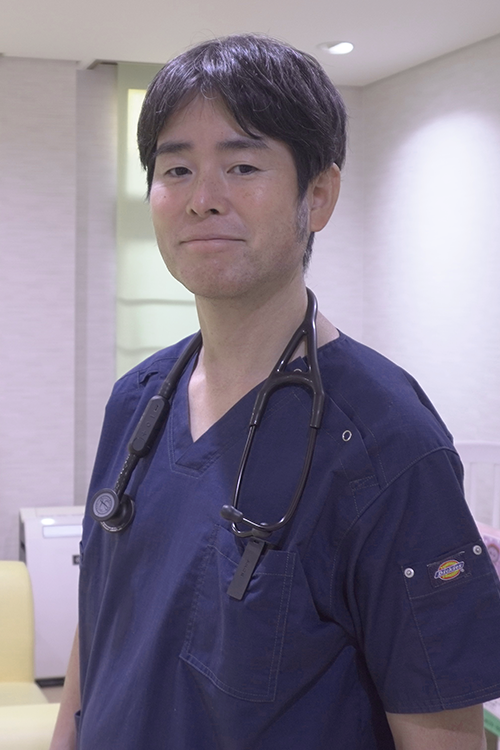
神戸大学医学部附属病院等の最前線で長年消化器・肝臓内科の臨床と研究に従事。医学博士。 標準治療では回復が困難な進行した肝炎や肝硬変に対し、新たな選択肢としての「肝臓再生医療」にいち早く取り組む。また、肝硬変患者さまの中で合併症(潜在性肝性脳症)を有する割合を明らかにし、カルニチンによる潜在性肝性脳症の治療効果を世界で初めて報告するなど、国際的な英文医学誌への論文掲載実績も多数(代表論文:Hepatol Res 2016; 46(2): 215-224)。科学的根拠に基づいた高度な専門知識と精緻な診断で、患者様の肝臓を守るサポートを行っています。
≫ 詳しい経歴や全研究実績はこちら
- 院長
- 斉藤雅也 Masaya Saito
日本肝臓学会 肝臓病専門医 Hepatologist, The Japan Society of Hepatology - 所在地
- 〒651-2412
兵庫県神戸市西区竜が岡1-15-3
(駐車場18台あり) - 電話
-
- 電話:078-967-0019
- 携帯電話:080-7097-5109
- アクセス
- 当院は、神戸市西区と明石市の境界付近に位置しており、明石市からも徒歩圏内です。実際に、明石市方面からも多くの患者様(肝臓病・一般内科)にご来院いただいております。駐車場も完備しておりますので、お車での通院も便利です。