
- 2026年6月7日
Don’t Overlook It! Persistent Whole-Body Itching Might Be an “SOS from the Liver”
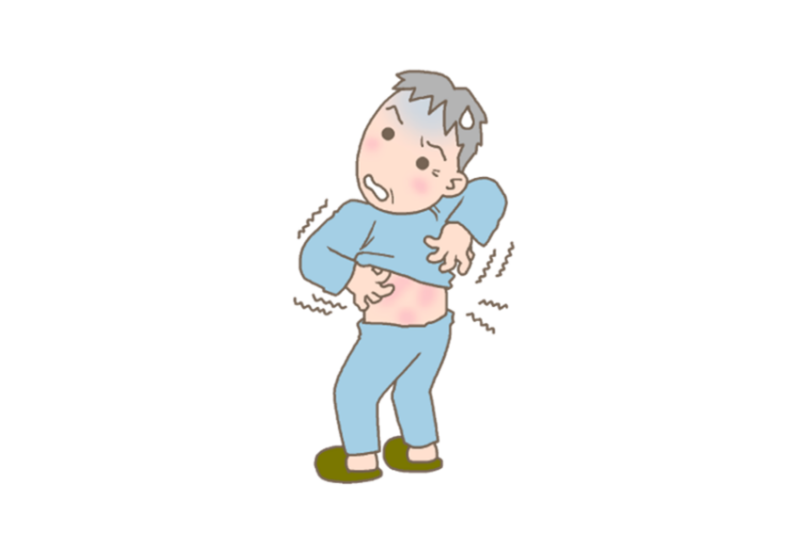
As the saying goes, “the skin is the mirror of the internal organs.” Abnormalities appearing on the skin are sometimes SOS signs alerting us to issues occurring deep within the body. In particular, persistent itching (pruritus) that strikes the entire body may be related to diseases of vital internal organs such as the liver, gallbladder, or kidneys, and should never be overlooked.
In this article, we will explain the mechanisms behind itching caused by liver disease, the dangerous signs lurking behind it, and a treatment method that could offer new hope.
1.The True Nature of “Itching (Pruritus)” Caused by Liver Disease
Skin itching can have various causes, such as dryness, allergies, or inflammation. However, the itching (pruritus) caused by liver disease has significantly different characteristics.
Why does a bad liver cause itching?
The liver plays a role in producing and secreting bile, which aids in the digestion and absorption of fats. When liver function drops significantly due to diseases like liver cirrhosis, the flow of this bile stagnates (a condition known as cholestasis).
As a result, itch-inducing substances contained in bile, such as “bile acids,” back up into the bloodstream, circulate throughout the body, and accumulate in the skin. It is believed that intense itching occurs when these substances stimulate the nerves in the skin.
Furthermore, when jaundice (a condition where the skin and whites of the eyes turn yellow) becomes severe, it is often accompanied by intense itching all over the body. This is a crucial sign indicating a decline in liver function. Diseases such as liver cirrhosis and primary biliary cirrhosis (primary biliary cholangitis) are especially known to present with whole-body itching symptoms.
5 Characteristics of Itching (Pruritus) Caused by Liver Disease
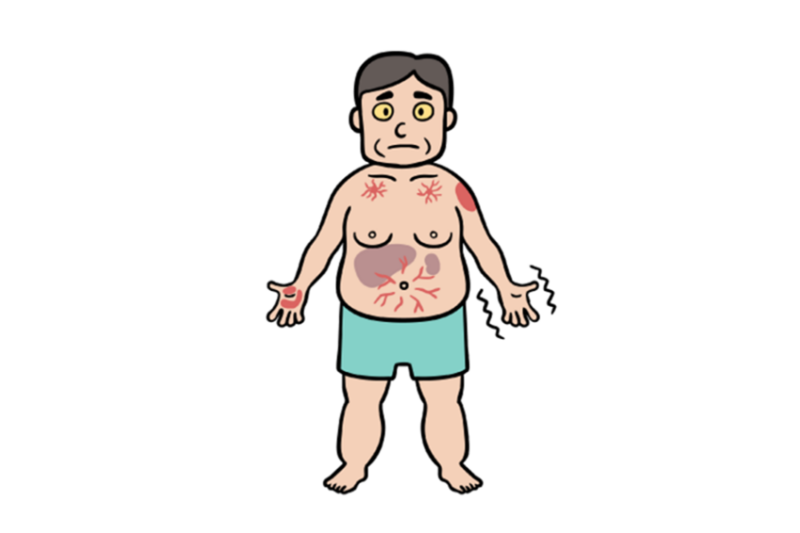
Itching caused by liver disease has the following characteristics:
- No visible abnormalities: Despite the absence of rashes or redness on the skin, you feel an intense itch that seems to come from inside the body. This condition may manifest as cutaneous pruritus.
- Whole-body itching: The itch occurs over a wide area, especially on the back, abdomen, and limbs.
- Scratching doesn’t help: Even if you scratch intensely, the itching doesn’t subside; in fact, it may worsen.
- Worsens at night and causes insomnia: The itching can become stronger when you lie down, becoming severe enough to interfere with your sleep.
- Over-the-counter medications are ineffective: Common antihistamines tend to show little to no effect.
2.Dangerous if They Appear Alongside Itching! Signs of Advanced Liver Disease
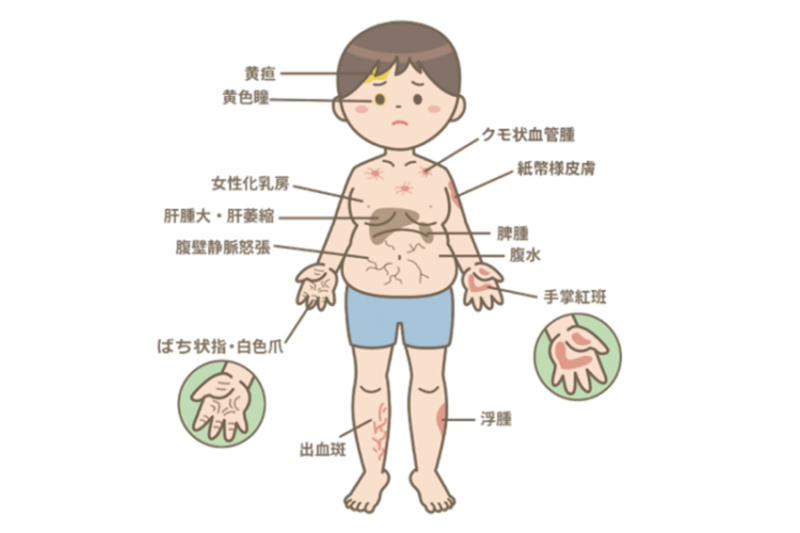
The liver is known as the “silent organ,” characterized by its failure to send specific signs until a disease has progressed considerably. However, itching (pruritus) suggests that liver function has dropped significantly, and the disease may be transitioning to a serious stage known as decompensated liver cirrhosis.
If even one of the following symptoms appears in addition to whole-body itching, it is a dangerous sign that your liver disease is advancing. Please consult a hepatologist immediately.
- Jaundice: The liver cannot process bilirubin, causing the skin and whites of the eyes to turn yellowish. Dark brown urine is also a sign. (Progression Stage: Decompensated phase)
- General malaise and severe fatigue: The liver’s metabolic function drops, failing to produce enough energy and allowing harmful substances to accumulate in the body. (Progression Stage: Compensated / Decompensated phase)
- Edema and ascites: The liver cannot produce enough albumin, causing fluid to leak from blood vessels. Alternatively, the liver hardens, worsening blood flow. (Progression Stage: Decompensated phase)
- Palmar erythema and spider angiomas: Because hormone breakdown in the liver stagnates, red blood vessels appear on the palms, chest, or shoulders. (Progression Stage: Decompensated phase)
- Hepatic encephalopathy: Harmful substances like ammonia, which the liver fails to detoxify, affect the brain (causing a drop in concentration, hand tremors / flapping tremors, severe daytime sleepiness, etc.). (Progression Stage: Decompensated phase)
3.Coping Methods and New Hope for Itching Caused by Liver Disease

For itching related to liver disease, first-aid measures such as cooling the skin surface to soothe the itch are possible, but the fundamental solution is to treat the underlying liver disease.
For those experiencing whole-body itching or any of the dangerous signs mentioned above, it is essential to undergo detailed testing at a medical institution—specifically a hepatologist—without making self-judgments. The director of Saito Clinic of Internal Medicine is a Hepatology Specialist certified by the Japan Society of Hepatology and also an Ultrasound Specialist, allowing for a precise diagnosis of the liver’s condition.
Conventional Treatments and Their Limits
In conventional treatments for liver cirrhosis, symptomatic therapies such as medications to suppress severe itching have been utilized. However, unfortunately, there is currently no effective standard treatment that can fundamentally reverse a hardened liver (fibrosis) back to its original state.
A New Option: Regenerative Medicine
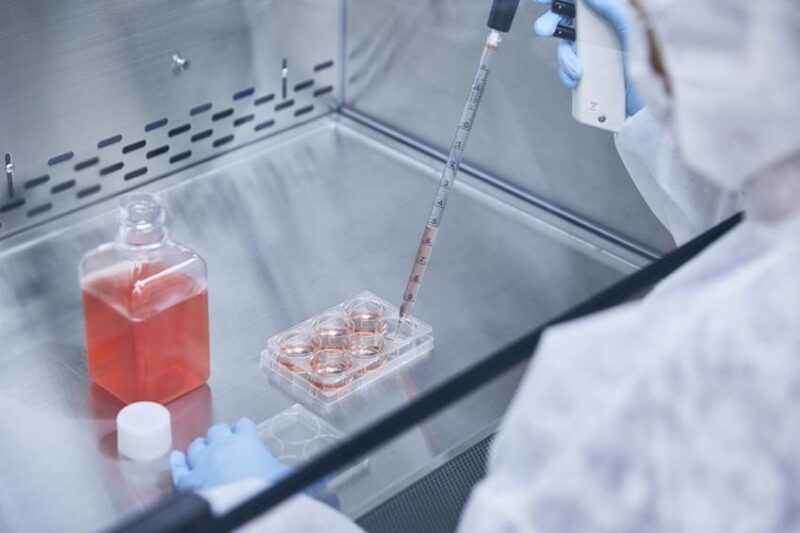
To address the limitations of conventional treatments, our clinic offers a new treatment approach called regenerative liver medicine using stem cells.
Stem cell therapy is a treatment method where stem cells collected from the patient’s own buttock fat tissue are cultured and then returned to the body via an IV drip. These stem cells gather in the damaged liver tissue (the homing effect), and the following functions are expected:
- Suppression of inflammation: Suppressing chronic inflammation occurring in the liver.
- Suppression and improvement of fibrosis: Suppressing the generation of fibrous tissue that causes the liver to harden, with the potential to inhibit or improve already advanced fibrosis.
By promoting the recovery of liver function itself, this treatment has the potential to consequently reduce the accumulation of itch-inducing substances, alleviate general malaise, reduce ascites, improve hepatic encephalopathy, and enhance your Quality of Life (QOL).
In particular, considering regenerative medicine before cirrhosis symptoms become severe increases the likelihood of promoting the recovery of remaining liver function and delaying disease progression.
4.Please Do Not Give Up
The sign of itching sent by the “silent organ” is an important message that affects your health. If you have persistent, unexplained itching, never dismiss it as “just rough skin,” and please consult a hepatologist.
At Saito Clinic of Internal Medicine, we thoroughly provide conventional standard treatments while concurrently performing regenerative liver medicine using stem cells, allowing us to propose the optimal treatment tailored to each individual patient.
Even if your cirrhosis symptoms have become severe, please do not give up. Even in patients with decompensated liver cirrhosis suffering from severe malaise, ascites, or hepatic encephalopathy, we have seen cases where these symptoms gradually improve over the course of six months to a year by utilizing regenerative liver medicine.
For those living far away or who find it difficult to visit the clinic immediately, we also accept preliminary consultations online. Please do not struggle alone; feel free to contact us.
さいとう内科クリニック
院長:斉藤 雅也 Masaya Saito
- 日本内科学会認定医
- 日本肝臓学会専門医
- 日本消化器病学会専門医
- 日本超音波医学会専門医
- 日本消化器内視鏡学会専門医
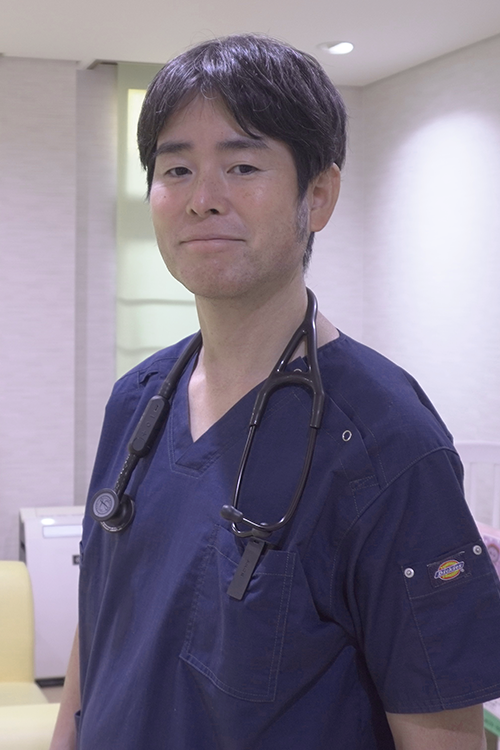
神戸大学医学部附属病院等の最前線で長年消化器・肝臓内科の臨床と研究に従事。医学博士。 標準治療では回復が困難な進行した肝炎や肝硬変に対し、新たな選択肢としての「肝臓再生医療」にいち早く取り組む。また、肝硬変患者さまの中で合併症(潜在性肝性脳症)を有する割合を明らかにし、カルニチンによる潜在性肝性脳症の治療効果を世界で初めて報告するなど、国際的な英文医学誌への論文掲載実績も多数(代表論文:Hepatol Res 2016; 46(2): 215-224)。科学的根拠に基づいた高度な専門知識と精緻な診断で、患者様の肝臓を守るサポートを行っています。
≫ 詳しい経歴や全研究実績はこちら
- 院長
- 斉藤雅也 Masaya Saito
日本肝臓学会 肝臓病専門医 Hepatologist, The Japan Society of Hepatology - 所在地
- 〒651-2412
兵庫県神戸市西区竜が岡1-15-3
(駐車場18台あり) - 電話
-
- 電話:078-967-0019
- 携帯電話:080-7097-5109
- アクセス
- 当院は、神戸市西区と明石市の境界付近に位置しており、明石市からも徒歩圏内です。実際に、明石市方面からも多くの患者様(肝臓病・一般内科)にご来院いただいております。駐車場も完備しておりますので、お車での通院も便利です。