
- 2026年6月7日
Is Liver Cirrhosis No Longer Curable? A Hepatologist Explains the Progression from Early Symptoms to End-Stage (Ascites, Jaundice) and Regenerative Liver Medicine
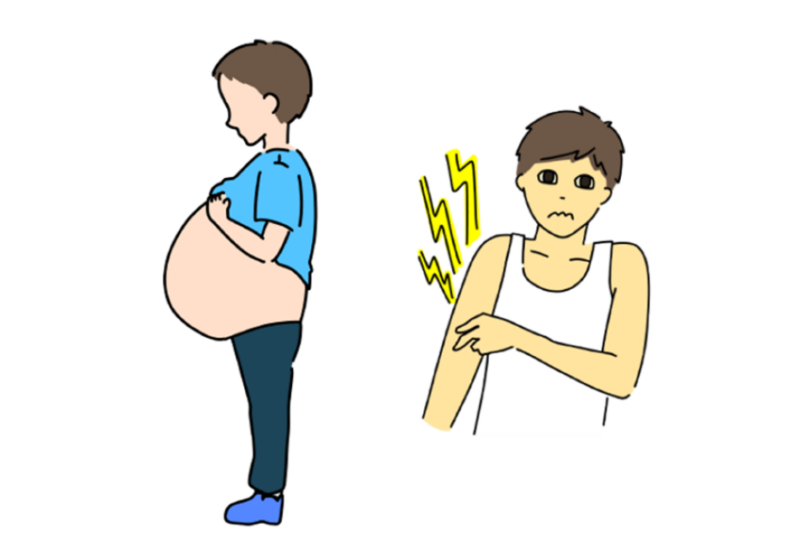
“I was diagnosed with liver cirrhosis.”
“I’m worried because fluid is building up in my abdomen (ascites).”
“Is liver cirrhosis an incurable disease?”
You or a family member may have been diagnosed with liver cirrhosis and feel a strong sense of anxiety about the future.
In the past, liver cirrhosis was considered a disease that “once developed, cannot be reversed or cured.” However, today, by removing the cause, receiving appropriate treatment, and utilizing new therapeutic methods, it is entirely possible to halt its progression and maintain a high quality of life (QOL).
In this article, from the perspective of a hepatologist, I will explain in detail how cirrhosis symptoms progress, the meaning behind symptoms like “ascites” and “jaundice,” and the latest treatment methods.
1. What is Liver Cirrhosis? — A State Where the Liver Becomes “Hard”
Liver cirrhosis refers to the final stage (end-stage) of liver disease.
When the liver experiences continuous inflammation over a long period (years to decades), liver cells are destroyed. To repair this damage, hard tissue called “fibers” increases. When this fibrous tissue spreads throughout the entire liver, causing it to become bumpy, hard, and deformed, the condition is called “liver cirrhosis.”
A hardened liver can no longer adequately perform its original functions.
Main Causes of Liver Cirrhosis
- Hepatitis C virus / Hepatitis B virus: (Trending downwards in recent years due to advancements in therapeutic drugs)
- Long-term heavy alcohol consumption: (Alcoholic liver disease)
- MASH (Metabolic dysfunction-associated steatohepatitis): (Progresses from fatty liver against a backdrop of obesity, diabetes, etc., excluding alcoholic liver disease)
- Others: (Drug-induced liver injury, autoimmune hepatitis, primary biliary cholangitis, etc.)
Regardless of the cause, identifying and removing it early to start treatment is the key to stopping the progression to liver cirrhosis.
2. Progression and Symptoms of Liver Cirrhosis
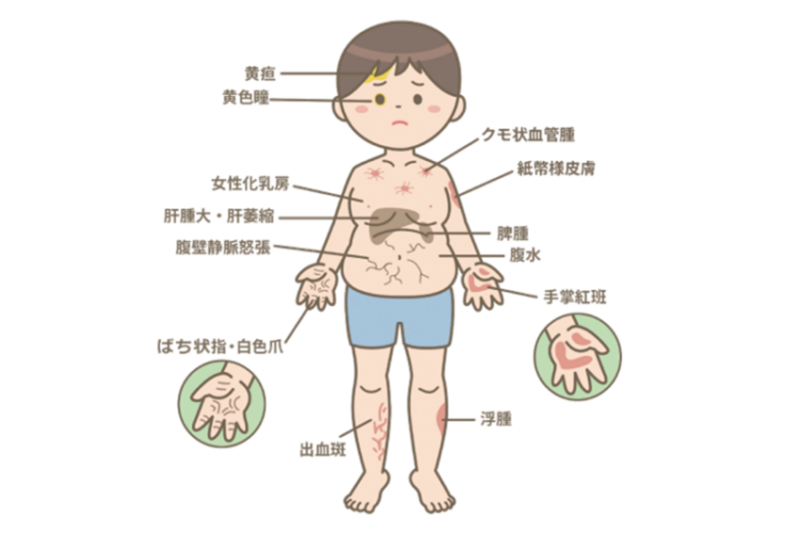
Liver cirrhosis is broadly divided into two stages based on how much liver function remains.
① Compensated Cirrhosis
This is the early stage where liver function is still relatively preserved.
There are almost no subjective symptoms. Even if there are, they are limited to feeling “easily tired,” “sluggish,” or “having no appetite,” and in many cases, people do not realize they have cirrhosis.
② Decompensated Cirrhosis
This is an advanced stage where liver function has significantly declined, and various complications appear.
At this stage, the following characteristic symptoms emerge:
- Ascites (Fluid in the abdomen)
Because the liver stops producing a protein called “albumin” and the hardened liver causes blood flow stagnation (portal hypertension), the fluid in the blood leaks into and accumulates in the abdomen (abdominal cavity). It is noticed through symptoms like a bloated stomach, sudden weight gain, and swollen legs.
- Jaundice
As liver function declines, the body can no longer excrete a yellow pigment called “bilirubin.” As this builds up in the blood, the skin and the whites of the eyes turn yellow.
- Hepatic Encephalopathy
Harmful substances like ammonia, which the liver should normally break down, reach the brain and cause impaired consciousness. In the early stages, symptoms start with “spacing out,” “losing track of time or place,” or “reversing day and night sleep rhythms.” As it progresses, it can lead to a coma.
- Esophageal and Gastric Varices
Because the liver is hard, blood that is supposed to flow through the liver looks for a detour and flows into the veins of the esophagus and stomach. As a result, the veins swell up like bumps (varices). These varices are prone to rupturing. Once they rupture, they cause massive hematemesis (vomiting blood) or melena (black, bloody stools), which is life-threatening.
3. What is the Life Expectancy if “Ascites” or “Jaundice” Appears?

Patients and their families often ask us about “life expectancy with ascites” or “life expectancy once jaundice appears.”
It is true that ascites and jaundice are signs of “decompensated cirrhosis,” where liver function has severely declined. If left untreated, the situation is indeed critical.
However, the appearance of these symptoms does not mean you have only a “short time left to live” right away.
- Ascites: Symptoms can be alleviated with diuretics (medications to increase urine output), albumin supplementation, salt restriction, and “ascites paracentesis,” a procedure where a needle is inserted into the abdomen to drain the fluid.
- Jaundice: Treatment primarily focuses on addressing the underlying deterioration in liver function.
The important thing is to view these symptoms as “danger signals from the liver” and immediately start appropriate treatment under the care of a hepatologist. With proper treatment, it is possible to control the symptoms while maintaining your quality of life (QOL).
4. The Latest Treatments for Cirrhosis — From the Era of “Incurable” to “Suppressing Progression”
The three fundamentals of cirrhosis treatment are:
- Removing the cause: (Eliminating the Hepatitis C virus, suppressing the multiplication of the Hepatitis B virus, abstaining from alcohol, managing lifestyle diseases that cause MASH)
- Treating complications: (Managing the aforementioned ascites, varices, and hepatic encephalopathy)
- Nutritional and lifestyle guidance: (Salt restriction, intake of high-quality protein, rest)
In addition to these, new treatments aimed at “restoring lost liver function” have emerged in recent years.
Regenerative Medicine (Stem Cell Therapy): A New Option
In the past, “liver transplantation” was the only curative treatment for cirrhosis. However, the shortage of donors and the significant physical burden of the surgery were major challenges.
This is why “regenerative medicine (stem cell therapy)” is drawing attention.
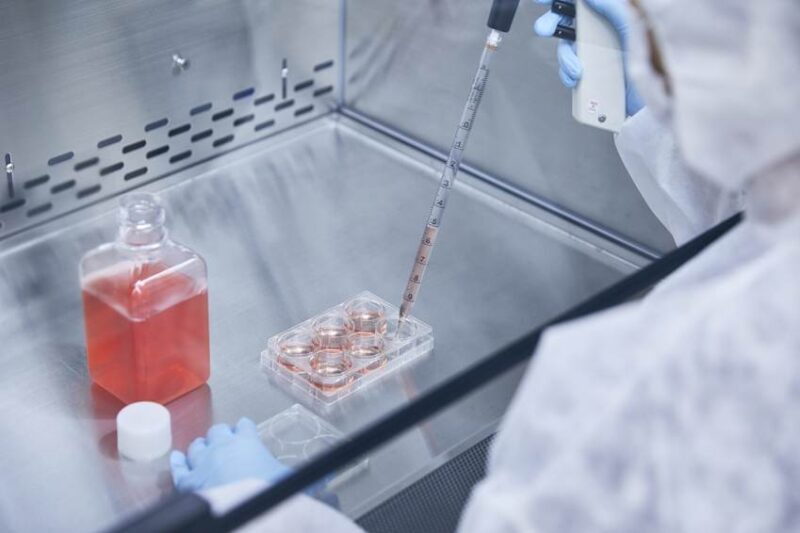
This is a treatment method where special cells called “stem cells” are extracted from the patient’s own buttock fat, cultured and multiplied, and then returned to the body via an intravenous drip. These stem cells gather in the liver, and by suppressing inflammation and promoting the repair of damaged liver cells, they are expected to halt the decline in liver function and improve it.
- Suppressing the progression of liver fibrosis (hardening)
- Improving liver function markers (AST, ALT, albumin, etc.)
- Alleviating subjective symptoms like fatigue and ascites
For those who have not achieved sufficient results with conventional treatments or are looking for alternatives to a liver transplant, this therapy can be a new, hopeful option.
5. Conclusion: Do Not Give Up, Please Consult a Hepatologist
Liver cirrhosis is a disease that, once diagnosed, you will need to manage for the rest of your life. However, it is by no means an “incurable” or “too late to treat” disease.
By accurately identifying the cause, appropriately controlling complications like ascites and jaundice, and reviewing your lifestyle, it is entirely possible to halt its progression and lead a vigorous daily life.
Today, new treatments like regenerative medicine, which aim for the once-difficult “improvement of liver function,” have also begun.
Even if you have been diagnosed with liver cirrhosis, or if you are feeling anxious due to symptoms like “weight loss in end-stage cirrhosis,” please do not give up. First, consult a hepatologist. Let’s work together to find the best treatment method for you.
さいとう内科クリニック
院長:斉藤 雅也 Masaya Saito
- 日本内科学会認定医
- 日本肝臓学会専門医
- 日本消化器病学会専門医
- 日本超音波医学会専門医
- 日本消化器内視鏡学会専門医

神戸大学医学部附属病院等の最前線で長年消化器・肝臓内科の臨床と研究に従事。医学博士。 標準治療では回復が困難な進行した肝炎や肝硬変に対し、新たな選択肢としての「肝臓再生医療」にいち早く取り組む。また、肝硬変患者さまの中で合併症(潜在性肝性脳症)を有する割合を明らかにし、カルニチンによる潜在性肝性脳症の治療効果を世界で初めて報告するなど、国際的な英文医学誌への論文掲載実績も多数(代表論文:Hepatol Res 2016; 46(2): 215-224)。科学的根拠に基づいた高度な専門知識と精緻な診断で、患者様の肝臓を守るサポートを行っています。
≫ 詳しい経歴や全研究実績はこちら
- 院長
- 斉藤雅也 Masaya Saito
日本肝臓学会 肝臓病専門医 Hepatologist, The Japan Society of Hepatology - 所在地
- 〒651-2412
兵庫県神戸市西区竜が岡1-15-3
(駐車場18台あり) - 電話
-
- 電話:078-967-0019
- 携帯電話:080-7097-5109
- アクセス
- 当院は、神戸市西区と明石市の境界付近に位置しており、明石市からも徒歩圏内です。実際に、明石市方面からも多くの患者様(肝臓病・一般内科)にご来院いただいております。駐車場も完備しておりますので、お車での通院も便利です。