
- 2026年6月7日
Is That Abdominal Swelling “Ascites”? Causes and Treatments for Fluid Accumulation in Liver Cirrhosis

Hello, I am Masaya Saito, Director of Saito Clinic of Internal Medicine.
Some of you may have had a “fatty liver” pointed out during a health checkup or may be feeling concerned about your liver function values. The liver is often called the “silent organ,” and it has a characteristic where subjective symptoms are difficult to notice even as a disease progresses.
Because of this, vague ailments such as “feeling somewhat sluggish” or “unable to shake off fatigue” are easily overlooked.
If you have recently been bothered by abdominal bloating or if the swelling in your legs has worsened, it might be a serious SOS signal from your liver. In particular, “ascites” (fluid accumulation in the abdomen), which appears as liver cirrhosis progresses, is a critical complication that significantly lowers a patient’s Quality of Life (QOL) and can be life-threatening.
In this blog, we will explain why ascites accumulates, the underlying disease of liver cirrhosis, and how the regenerative medicine provided at our clinic brings new hope for ascites that has been difficult to resolve with conventional treatments.
What is Ascites? A Terrifying Complication of Liver Cirrhosis
Ascites refers to a condition where body fluid abnormally accumulates inside the abdominal cavity. Ascites does not exist when there are no issues with the liver, but as liver cirrhosis progresses, the decline in liver function makes it easier for fluid to accumulate.
Main Causes of Ascites Accumulation
- Decreased Albumin Synthesis Capacity
The liver produces a crucial protein called “albumin,” which maintains the water balance in the blood. When liver function declines, its ability to synthesize albumin drops, leading to a decrease in the albumin concentration in the blood. This makes it easier for fluid to leak out of the blood vessels, causing edema (swelling) and ascites.
- Portal Hypertension
When the liver hardens due to cirrhosis, the pressure in the “portal vein”—the blood vessel that sends blood from the intestines to the liver—rises. This stagnation of blood flow makes it easier for fluid to leak from the blood vessels, accelerating the accumulation of ascites.
The Unbearable Pain and Impact on Daily Life Caused by Ascites
- Abdominal Bloating and Distress: A large amount of ascites accumulating in the abdomen significantly alters one’s physical appearance, causing a strong sense of tightness and difficulty breathing.
- Loss of Appetite and Nausea: Because the internal organs are compressed, eating becomes difficult, and one may experience nausea.
- Edema (Swelling): The legs and other parts of the body become severely swollen and heavy, making even moving feel like a chore.
- Risk of Infection: There is a risk of bacteria infecting the ascites fluid, causing “peritonitis,” which is a life-threatening condition.
Ascites primarily appears in the stage of decompensated liver cirrhosis, where the disease has progressed and the liver’s function can no longer meet the body’s demands.
Under conventional treatments, methods such as diuretics, albumin administration, therapeutic abdominal paracentesis (TAP) to directly drain the fluid with a needle, and cell-free and concentrated ascites reinfusion therapy (KM-CART) are performed. However, these are aimed at temporary symptom relief and do not restore the function of the liver itself.
In the case of “refractory ascites,” which cannot be controlled with diuretics, patients and their families are sometimes tormented by a sense of despair, feeling that “there is nothing more that can be done” or “it’s too late.”
Diagnosing Ascites and the Underlying Condition of the Liver
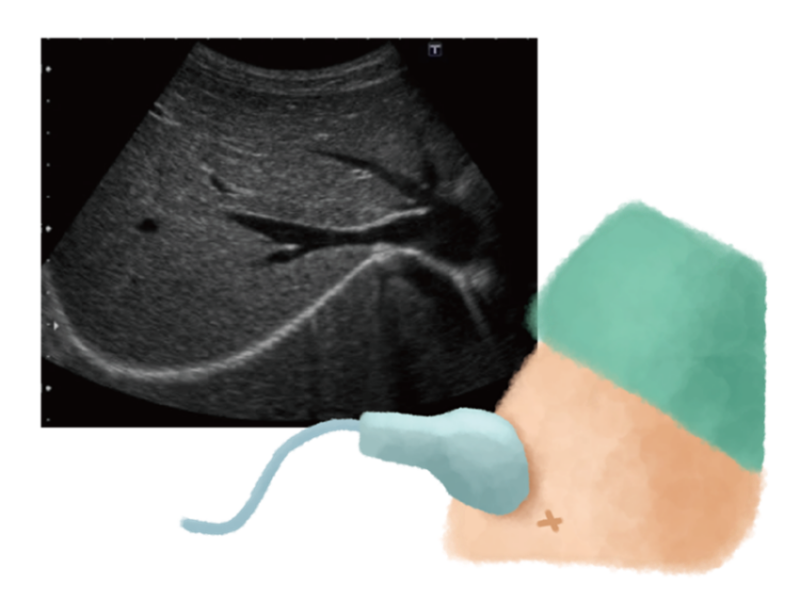
Because the liver is a “silent organ,” even if liver cirrhosis has progressed to the point where ascites accumulates, it is crucial to accurately grasp the underlying condition of the liver. The primary diagnostic methods for ascites are as follows:
Physical Examination
We check for abdominal swelling and a fluid wave (the sensation of accumulated fluid).
Blood Tests
In addition to evaluating liver function (AST, ALT, γ-GTP, etc.), we examine the albumin concentration and markers that estimate the degree of liver fibrosis (stiffness). AST and ALT are signs that liver cells are damaged, while albumin is an important indicator of the liver’s synthesis capacity.
Imaging Diagnostics
- Abdominal Ultrasound (Echo) Examination: This test allows us to painlessly, safely, and visually evaluate the size and shape of the liver, internal structures, the presence and accumulation degree of fat (mild, moderate, severe), the presence of ascites, spleen enlargement, and portal vein blood flow. Our clinic’s director is an Ultrasound Specialist certified by the Japan Society of Ultrasonics in Medicine, ensuring high-quality examinations.
- CT / MRI Scans: These are useful for detecting morphological changes in the liver, ascites, neoplastic lesions like liver cancer, and evaluating the vascular system.
- Liver Stiffness Measurement (Shear Wave Elastography, etc.): Combined with an ultrasound, this objectively evaluates liver stiffness (the degree of fibrosis) numerically. This makes it possible to more accurately assess the risk of fatty liver progressing to NASH (accompanied by inflammation) and further into liver cirrhosis.
Through these tests, it is vital to accurately diagnose the current state of your liver and the progression of the ascites in order to formulate the optimal treatment plan.
Before Giving Up and Thinking It’s “Too Late”: A New Hope Through Regenerative Medicine
The treatment for liver cirrhosis mainly involves treating the underlying disease (such as antiviral drugs for viral hepatitis or abstinence from alcohol for alcoholic cirrhosis) and symptomatic therapy for complications (like ascites and hepatic encephalopathy). However, completely restoring a hardened liver to its original state has been considered difficult with conventional treatments. For this reason, a liver transplant has been regarded as the only curative treatment, but it comes with many challenges, including a shortage of donors, the physical burden of surgery, and high costs. However, medical science is advancing every day.
At Saito Clinic of Internal Medicine, we offer a new treatment approach called Liver Regenerative Medicine using stem cells for such patients.
The Potential of Stem Cell Therapy
Stem cells are believed to possess a “homing effect” (gathering at damaged tissues in the body), an “anti-inflammatory effect” (suppressing liver inflammation), a “fibrosis suppression effect” (slowing the progression of liver hardening), and a “tissue repair promotion effect” (secreting substances that encourage the repair and regeneration of damaged liver cells). Our clinic’s stem cell therapy involves culturing stem cells collected from the patient’s own adipose (fat) tissue and returning them to the body via an IV drip. Because your own cells are used, there is an extremely low risk of rejection.
Expected Effects
- Reduction of Ascites and Edema: Improvements in liver function can lead to increased albumin levels, making it harder for ascites to accumulate. This is expected to alleviate abdominal tightness and breathing difficulties, thereby improving QOL.
- Relief from General Fatigue: Improved liver function enhances the body’s overall energy metabolism, which may reduce chronic sluggishness and fatigue.
- Improvement in Liver Function Values: By suppressing inflammation and reducing damage to liver cells, improvements in liver function markers like AST and ALT can be expected.
- Improvement in Hepatic Encephalopathy Symptoms: The restoration of the liver’s detoxification function reduces the impact of harmful substances like ammonia on the brain, which may lead to improved concentration and the correction of day-night reversal.
- Enhancement of QOL (Quality of Life): The improvement of physical symptoms helps realize patients’ wishes, such as “I want to go on a trip again” or “I want to spend enjoyable time with my family,” leading to mental stability and bringing back their smiles.
- Treatment Cost and Duration: Liver regenerative medicine is currently an out-of-pocket treatment not covered by public health insurance. The initial treatment cost is 3.3 million yen (tax included). It is not a magical treatment that completely cures with a single IV drip; effects typically appear slowly over a period of about six months. Depending on the medical condition and constitution, multiple infusions may be necessary. Please note that treatment costs may be eligible for a medical expense deduction (up to a maximum of 2 million yen).
Our clinic is a medical facility that has submitted a Class II Regenerative Medicine Provision Plan to the Ministry of Health, Labour and Welfare and had it accepted. The director is a Hepatology Specialist certified by the Japan Society of Hepatology. Even if you have symptoms typical of liver failure such as ascites, edema, encephalopathy, fatigue, and jaundice, you can receive liver regenerative medicine as long as you do not currently have uncured liver cancer.
Take Action Now for the Future of Your Liver
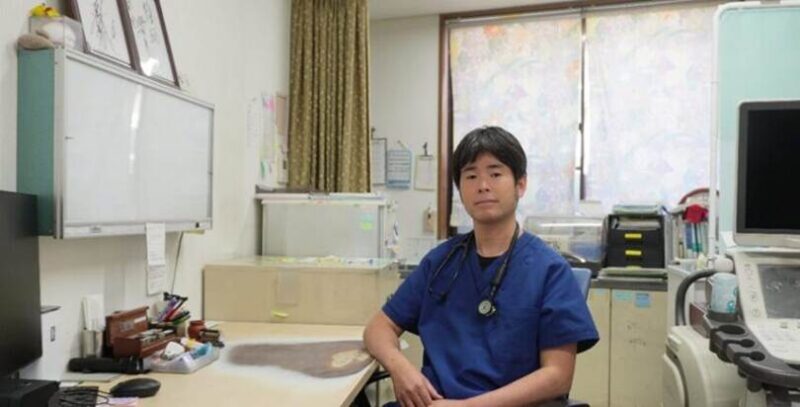
Even if abnormalities in your liver values are pointed out during a health checkup or you are suffering from ascites symptoms, the most important thing is to consult a specialist rather than struggling alone, wondering “Why is this happening?” or “What should I do?” If left untreated simply because there are no immediate symptoms, the disease can silently progress, increasing the risk of it becoming too late to treat.
At Saito Clinic of Internal Medicine, our director—who is both a Hepatology Specialist (Japan Society of Hepatology) and an Ultrasound Specialist (Japan Society of Ultrasonics in Medicine)—will precisely diagnose your liver’s condition and propose the optimal treatment plan.

We also offer online preliminary consultations using “Curon” (クロン). If you live far away or find it difficult to visit the clinic immediately, please feel free to reach out to us. Consultations from family members on behalf of the patient are also highly welcome.
There may be something we can do to help improve your liver values and help you regain your future health.
さいとう内科クリニック
院長:斉藤 雅也 Masaya Saito
- 日本内科学会認定医
- 日本肝臓学会専門医
- 日本消化器病学会専門医
- 日本超音波医学会専門医
- 日本消化器内視鏡学会専門医
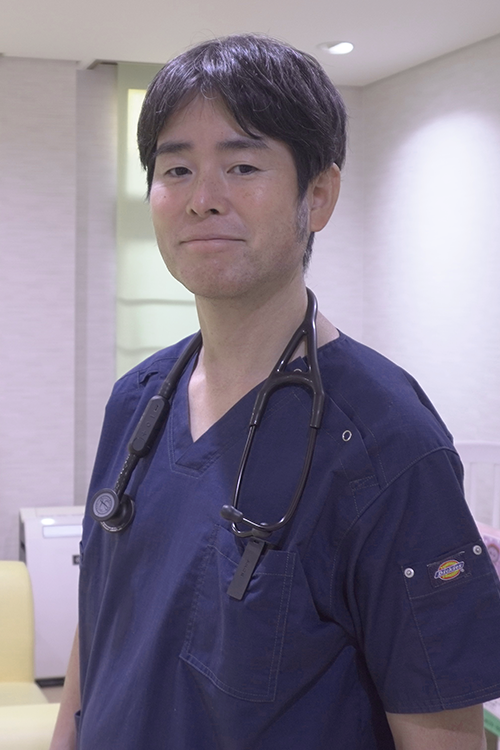
神戸大学医学部附属病院等の最前線で長年消化器・肝臓内科の臨床と研究に従事。医学博士。 標準治療では回復が困難な進行した肝炎や肝硬変に対し、新たな選択肢としての「肝臓再生医療」にいち早く取り組む。また、肝硬変患者さまの中で合併症(潜在性肝性脳症)を有する割合を明らかにし、カルニチンによる潜在性肝性脳症の治療効果を世界で初めて報告するなど、国際的な英文医学誌への論文掲載実績も多数(代表論文:Hepatol Res 2016; 46(2): 215-224)。科学的根拠に基づいた高度な専門知識と精緻な診断で、患者様の肝臓を守るサポートを行っています。
≫ 詳しい経歴や全研究実績はこちら
- 院長
- 斉藤雅也 Masaya Saito
日本肝臓学会 肝臓病専門医 Hepatologist, The Japan Society of Hepatology - 所在地
- 〒651-2412
兵庫県神戸市西区竜が岡1-15-3
(駐車場18台あり) - 電話
-
- 電話:078-967-0019
- 携帯電話:080-7097-5109
- アクセス
- 当院は、神戸市西区と明石市の境界付近に位置しており、明石市からも徒歩圏内です。実際に、明石市方面からも多くの患者様(肝臓病・一般内科)にご来院いただいております。駐車場も完備しておりますので、お車での通院も便利です。